
Pain goes Unheard
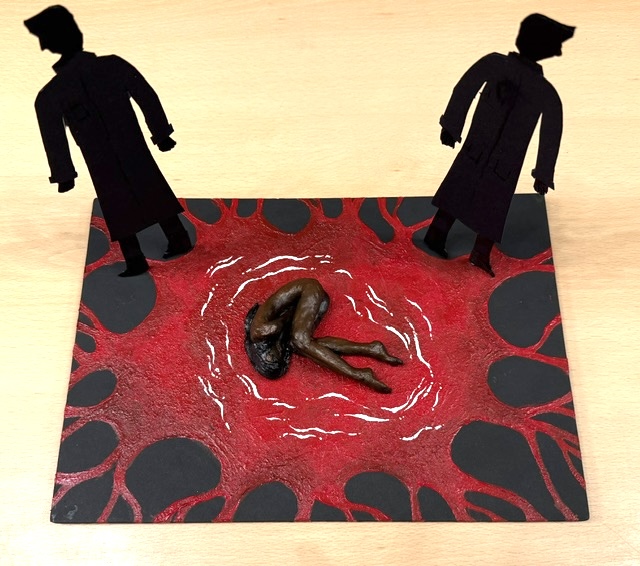
Faye Safiullah, Rex Booth, Hafsa Abdullah and Dave Meinson Babu
Mixed-media





This creative enquiry was inspired by our interest in women’s health and the universal feeling of being unheard or dismissed within the healthcare system.
The art piece reflects the experiences of individuals living with endometriosis, a condition often marked by chronic pain, delayed diagnosis, and isolation. At the centre is a clay figure of a woman, her position expressing the pain and anxiety that shapes her daily life. She sits on a red-painted surface, symbolising the internal bleeding and inflammation caused by the disease. Positioned around this structure are small figures on sticks, portraying doctors turning away from the patient – a metaphor for the lack of awareness of the disease, and the dismissal many patients experience when seeking a diagnosis.
We hope our piece will raise awareness of endometriosis and help people better understand the impact it can have on everyday life. The condition is often misunderstood, and the pain experienced by those living with it may not be visible to others. Through our artwork, we want to encourage people to listen to patients, take their symptoms seriously and recognise how isolating it can feel when their experiences are dismissed.
Foundations of Medicine Conference, Collaborative Creative Piece, Year One 2025/26
I found this piece so thought provoking.
I often hear from patients that they feel un heard and ignored regarding endometriosis.
The clay model lying on the floor really struck me and the towering doctors over the top of her.
Very powerful
Having read Elinor Cleghorn’s book, ‘Unwell Women’, this really resonated with me as not only a woman but someone who really values listening to patients’ needs, regardless of gender. Women’s health often presents itself in different ways compared to men i.e heart attacks and for women to constantly be overlooked in situations where symptoms affect only biological females is disheartening. The art piece did a wonderful job at portraying struggling patients and how much pain consumes them – demonstrated by the foetal position. The woman is vulnerable and exposed with two shadow doctors leering over her, their identities hidden whereas she is on full display – which to me shows how accountability may never weigh on the doctor and their ignorance and lack of urgency to women’s pain. The woman being a POC also details how it is statistically found that POC women are generally overlooked and dismissed to Caucasian women due to differences in pain tolerance.
I found this piece particularly powerful because it highlights how women’s pain, especially in conditions such as endometriosis, can often be dismissed or misunderstood within healthcare. I think the title, Pain goes Unheard, is effective because it reflects the frustration of patients who struggle to have their symptoms taken seriously and may face delays in receiving a diagnosis. It made me reflect on how important it is for doctors to listen to patients without making assumptions about their experiences, particularly when symptoms are difficult to measure objectively. As a medical student, I think this piece is a reminder that pain is subjective and that just because it cannot always be seen or measured does not mean it is any less real. It reinforces the importance of empathy, active listening and taking women’s health concerns seriously.