
Inside the Walls of a Vaccination Centre
Group 4
Sculpture





Vaccination is a big controversy surrounding healthcare.
As healthcare professionals, it’s our duty to provide the best care possible to our community so it’s important to be aware of the attitudes the public has towards vaccinations to keep everyone safe and healthy by providing the correct information and empathy.
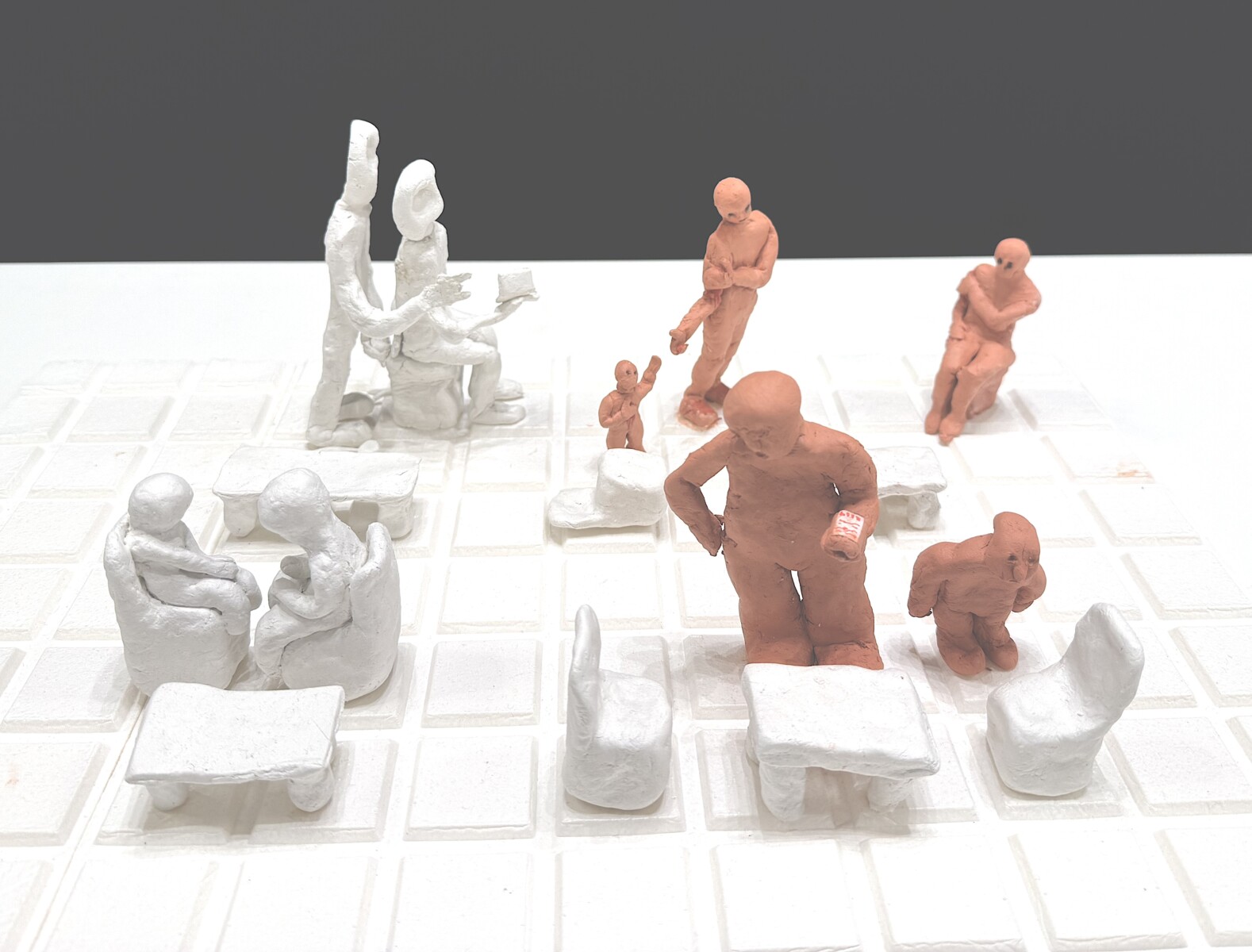
We depicted these attitudes through sculpting a vaccination centre with four appointments occurring, each showing a specific attitude towards vaccinations.
One appointment represents the concern surrounding health impacts which include worries that vaccination causes autism, and asthma as well as common symptoms following vaccination such as aching. We have included a child and two of the figures clutching their arms to represent the physical experience.
The child and the parent with a phone represents the paranoia that may set in as a parent without sufficient education or reassurance accesses the thousands of misleading articles about potential dire consequences of vaccinations on their child’s health.
The doctor comforting the scared child is intended to bring awareness into trypanophobia. As this particular state of anxiety hinders people from receiving vaccinations, it’s important for healthcare professionals to be compassionate so that patients can remain safe.
The doctor administering a patient’s vaccination with the leaflet represents the positive attitudes towards vaccination. The use of leaflets can inform people of the benefits of vaccinations and therefore can help reach herd immunity.
Simi Shreyakar, Ethan Hunt, Polly Chamberlain and Rashid Khalid, Year One.
Creative Piece exhibited in the Foundations of Medicine Conference 2024
Comments
Add legacy comments here
This piece, by depicting 4 different attitudes to vaccinations, not only acknowledges the increasing issue of anti-vaxxers within medicine – which is a major threat to public health – but also the different responsibilities of doctors in a vaccine clinic. Firstly, the ability to comfort those who suffer from trypanophobia is shown clearly in this artwork and so helps to inform that not all vaccine hesitancy is rooted in misinformation but instead can be due to anxiety surrounding medical procedures. Therefore it excellently manages illustrates the complexity of good medical practice and how vaccinations in particular require a key focus on both education and reassurance.
This piece is especially relevant following the Covid-19 vaccine rollout scheme which caused a boom in vaccine scepticism and distrust. Additionally, since the beginning of social media there has be the amplification of misinformation surrounding vaccines and the existence of online groups who spread false information and conspiracy theories about vaccines. This paired with the false studies published in 1998 by Andrew Wakefield which incorrectly linked vaccinations in children to higher rates of autism, both have major public health impacts and threaten herd immunity which could be established through high vaccination rates. The danger of online misinformation is demonstrated by the child and parent in the image with a phone in hand and therefore this piece aptly addresses this as a cause of vaccine hesitancy. However, in contrast, this piece also represents how education can be provided in a meaningful way and through tools such as leaflets thus reducing vaccine mistrust.
Therefore this piece does a good job in presenting the disparities between groups who may enter a vaccination clinic and they’re varying requirements of medical care.