
The Art of Explaining
Priska Bissonauth





The ‘art of explaining’ began to take shape for me during a conversation, where I appreciated how much a single word can carry. The scenario involved me explaining to a simulated patient what ‘angina’ was. I was taking on the role of explaining for the first time and I felt a sense of uncertainty, not just about what to say, but how to say it. The actor playing the patient portrayed a range of emotions including disbelief, denial, sadness. I was working through not just the challenge of breaking down a diagnosis but also responding to the emotional journey of someone absorbing difficult news.
A moment that stuck with me was when the actor gave feedback afterwards. I had used the phrase ‘blocking the blood flow to your heart’ Although medically correct, he kindly mentioned how worrying this could sound to someone who was receiving a new diagnosis. That moment sparked reflection, and it reinforced the idea that explaining isn’t just about sharing information, but also about how that information is received. I learned that in medicine, explaining is not only a technical skill; it’s a deeply human one.
I had another opportunity to explore this concept deeper, a few weeks later. This time, the focus was on explaining diabetes. I tried a different approach. I broke the explanation into manageable parts, checking whether they understood and invited them to reflect the explanation back to me. I gave space for them to digest the information, letting the silence sit between us. I didn’t rush to fill it, and I felt both our understandings grow in that silence. I remembered to stay attentive to their emotions, avoiding alarming phrases. I observed growth in my ability to explain. I wasn’t just giving information; I was building understanding.
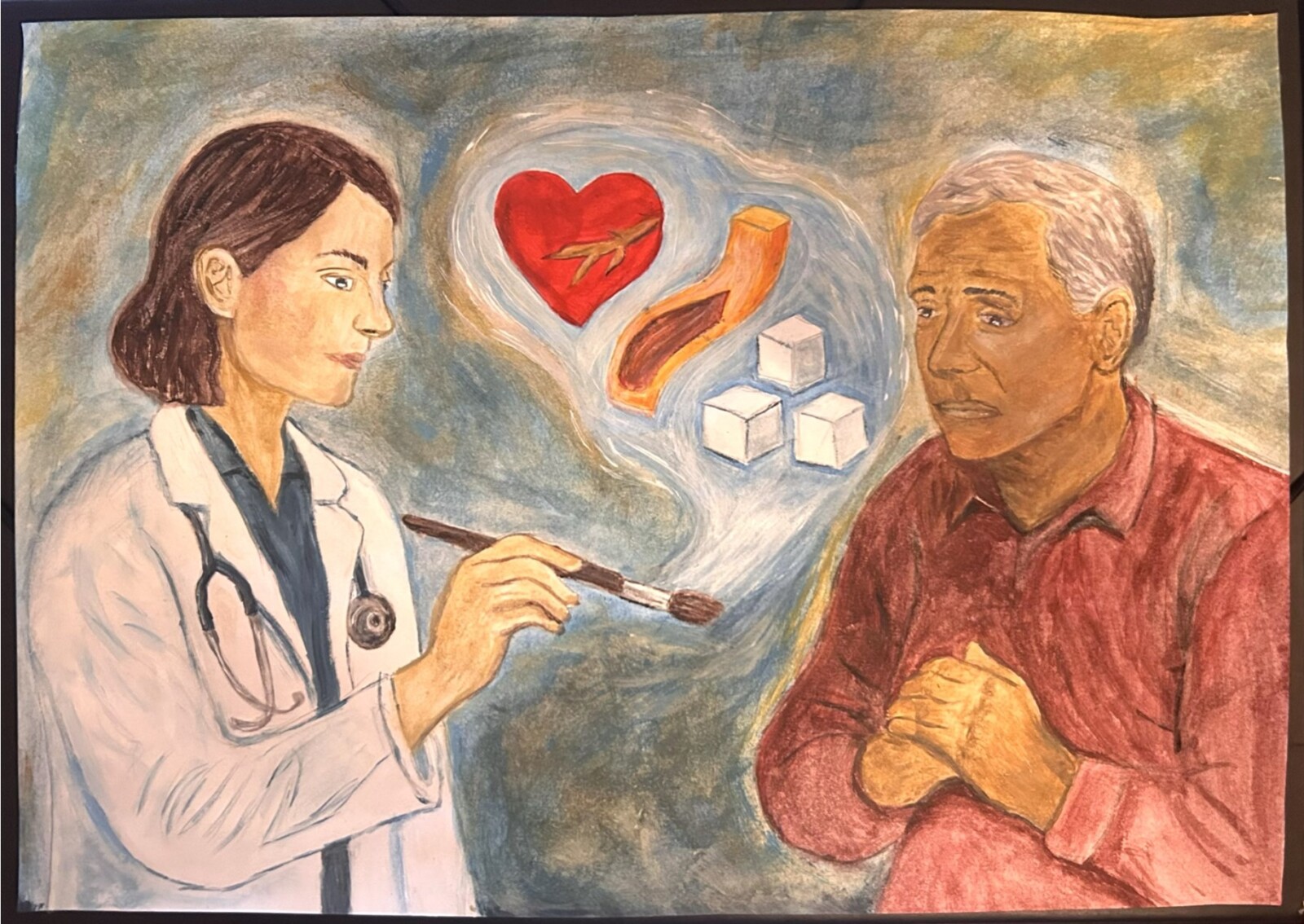
The piece I created, ‘The Art of Explaining’ reflects this growth. The medium I used was acrylic paints and it depicts a doctor with a paintbrush in hand. She’s painting in the space that lies between her and the patient. Personal to my reflection, as illustrated in my painting an artery representing blood flow; sugar cubes symbolising diabetes; and a heart glowing softly signifying empathy. I aimed to capture the process of explaining and some of the aspects involved. It’s symbolic of how explanation, when done with compassion, can be transformative.
I thought deeply on the process of creating a shared language. A shared platform for understanding and trust. I sense the natural frustration and hesitation when there’s a gap in that mutual understanding. Bridging that gap takes patience, empathy, and a conscious effort to meet the patient where they are. I paused to consider times where I felt the discomfort of being in an unfamiliar place, where communication with those around me didn’t come swiftly as it usually does. I brought this understanding into a medical setting, where tensions are already high and imagined how this would cause the weight of worries to deepen.
Through this rhythm of practice and reflecting, I’ve started to develop my own brush technique in that process. Recognising how explaining to patients in a way that is both informative and empathetic can turn confusion into clarity and fear into calm.
Effective Consulting Year 2, 2025-26
0 Comments