
The Patient
Anonymous





I assessed where she was sat, scrutinizing her surroundings my eyes flickering from her face to the wall so as not to make her feel uncomfortable as she looked down, avoiding my gaze. The walls of the room were painted a greying white, the small window set high into one wall was barred, the bright sunlight outside trying but failing to penetrate the room to where we were sitting. The conditions, I remember thinking, did not seem conducive to a healing.
So we sat in artificial light on plastic chairs, talking. We spoke about the other patients and the nurses on the ward whom she had just met and liked. We spoke about all the people she did not like also. Countless reasons for her displeasure were stated, none seemed valid or justified to me though to her, in the microcosm of the hospital, they were all encompassing.
I brought her some magazines, trashy ones we used to enjoy reading together and laughing at when she was still in school. She smiled when I described some of the ridiculous articles she could read but her gaze soon returned to her knees as she explained how she was no longer allowed to use her reading glasses because she had snapped the lenses in half and used them to cut herself. By this point I was numb to the self-harm. The thoughts that stung were for the wasted life she was living, having dropped out of school, wasting her keen intelligence.
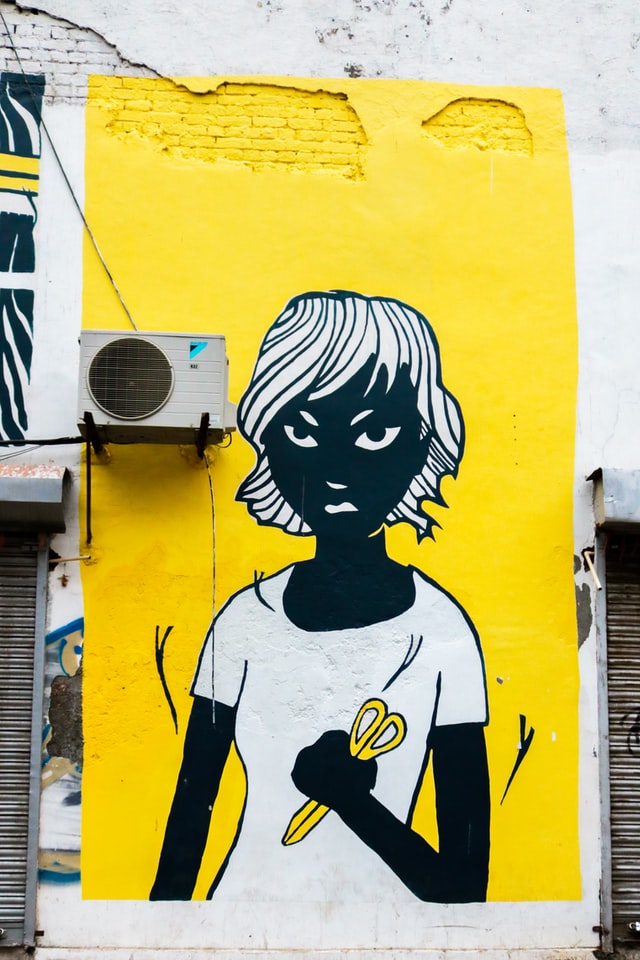
She asked if I wanted to play pool in their recreation area. I agreed, I had wanted to escape the grey room since I had arrived. We walked through the door into another larger room painted saccharine yellow. The colour almost mocked the pallid complexions of the gaunt young anorexia sufferers and the black moods of the depressed occupants. I did not ask to see her room. I found it hard enough to imagine her sleeping away from her own bed, the same one we had sat on to gossip about school friends and watch movies. I remember her being pleased that they had allowed her to paint the room a colour of her choice but this only worried me; they clearly expected her to stay here a while longer and wanted her to feel at home.
When visiting time was over I was more than ready to leave. I wanted to escape from the yellow room, from all the pale, damaged young people, from my best friend who was no longer the same. I felt awful — so guilty that I could escape and she could not and so guilty that I wanted to.
I knew I would return to the ward, but only through duty. I would return because of a memory of the friend I once had and through the hope that she would, perhaps someday, return to me.
My criticisms of the ward at this time were often unfair. It cannot have been nearly as dingy or unwelcoming as I remember. I hated the pale, muted colours and called them depressing but I equally hated the bright vibrant colours as they seemed to mock the mood of the residents. I think I felt protective towards my friend and the obviously limited resources the NHS could provide did not feel enough for such a special person. She was forced to do GCSE classes even though she had passed her GCSE exams a year previously with flying colours. It all felt so ill-thought out and impersonal to me.
I was also aware of how the little things could affect her mood so greatly. One seemingly ‘nasty’ look from a classmate could set off a spiral of self-doubt, so who knew what effect her surroundings could have had on her in such an enclosed space.
It was hard to see her in a hospital, really becoming defined by her illness. She was no longer my friend with depression, she was my depressed friend, and at first, and for a while after, she played this new found role and the role of the patient brilliantly.
Anonymous, to preserve patient-confidentiality
This is a beautifully written and deeply affecting piece that encapsulates the painful experience of visiting a close friend on a psychiatric ward. The writer portrays the visit with honesty and restraint, allowing the reader to feel both the claustrophobia of the setting and the quiet despair of witnessing someone they love become defined by their illness. There is also a beautiful dialectical balance between compassion and discomfort, the recognition that love can coexist with guilt, frustration, and a desire to escape.
From the opening lines, “She really seemed like a patient, a victim, as though she did not want to be there or anywhere else”, the narrator immediately establishes a tone of sorrow and alienation. The piece moves between detailed observation and inner reflection, mirroring how clinicians often oscillate between objective assessment and emotional reaction. The physical environment with its “greying white walls,” “barred window,” and “artificial light on plastic chairs,” becomes almost a character in itself, reflecting both the sterility of institutional care and the writer’s own unease. This environmental awareness is particularly resonant for medical students, reminding us how surroundings can affect a patient’s sense of dignity and recovery.
The writer discussing the friend’s self-harm with unsettling casualness, the breaking of glasses to cut herself, is especially powerful. The narrator’s numbness here is understandable and sparks a defence against the helplessness of not being able to fix the situation, highlighting the limits of empathy; sometimes, care involves simply being present rather than offering solutions. Hence, the line “I would return because of a memory of the friend I once had and through the hope that she would, perhaps someday, return to me” encapsulates the grief of watching illness eclipse identity.
I was particularly drawn to this piece because of my experience in a similar situation, but from the opposite side, as the friend in hospital. Reading this account offered me a new understanding of what that experience might have been like for those visiting me. It reminded me how isolating it can be for both patient and loved one, and how communication and empathy are often strained on both sides. As a future doctor, this perspective feels especially valuable: it emphasises that every patient exists within a web of relationships that are also affected by illness.