
When Morning Meets it’s End
Harriet Hardingham





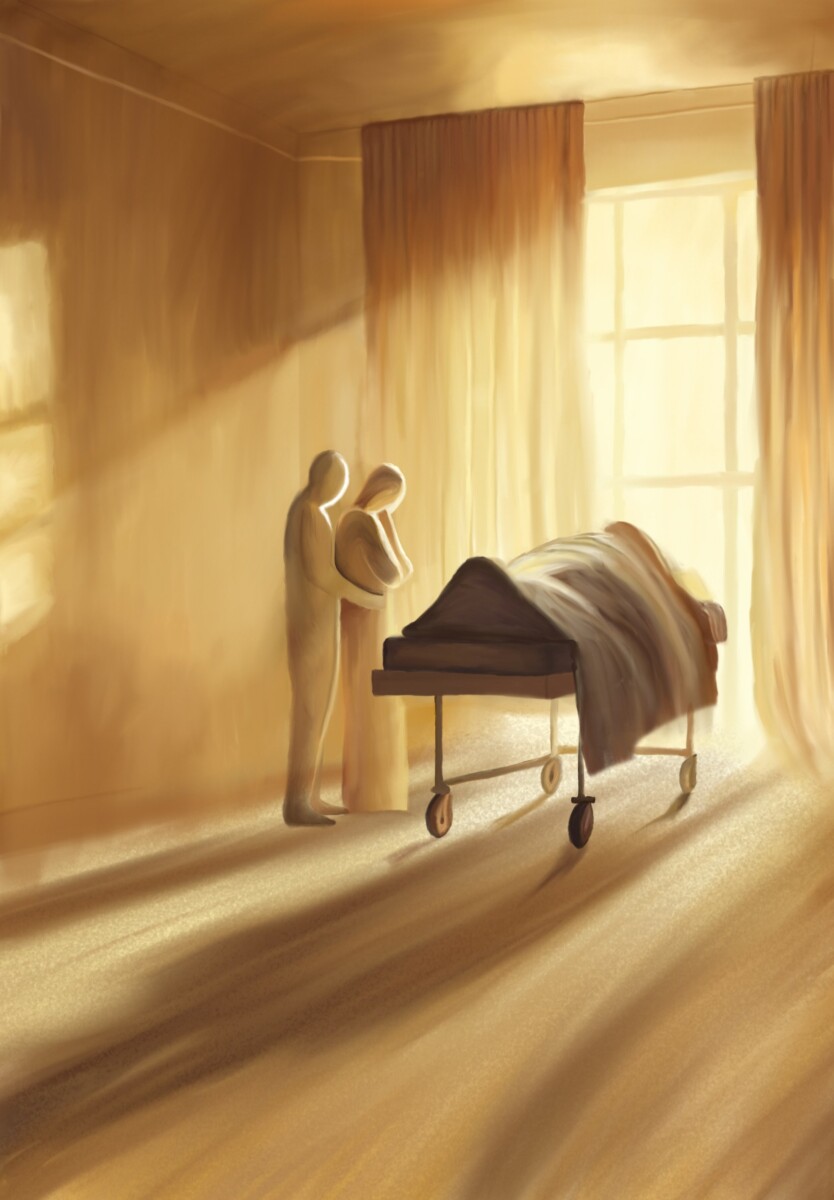
This artwork was born from my HCA placement on an elderly ward, where I witnessed a patient with a DNAR pass away peacefully surrounded by family.
As I exited the locker room I might have missed the scene with a blink of my eye, but I am thankful I did not. That may sound strange, having just witnessed death, but the atmosphere in the room was unlike anything I would have imagined: it was calm, soft and uplifting. Without urgency to intervene, the family could be fully present and support one another. Their faces held both sorrow and relief as the loved one, who had been suffering, was now at peace. The patient had been dealing with advanced dementia, and something a family member of another patient rang in my brain ‘I started mourning them a long time ago’. It was clear that for this family also, their ‘Morning Meets its End’ as I saw death met with acceptance and release.
This encounter challenged me deeply. As a medical student, the instinct is to act and sustain life. Yet here, doing nothing was the most compassionate response. I learned that dignity could matter more than duration. It stirred reflection on the timeless question about quantity versus quality and its relevance in healthcare.
As I created this piece, I thought of the family’s grief intertwined with gratitude and was reminded that death can be peaceful, and as I future doctor, I hope to help others embrace such moments with compassion and respect.
Effective Consulting, Year One, 2024-2025
Comments
Add legacy comments here
This is an exceptional piece of art, reflecting on life and death. The image shows two people looking on at an individual who has passed away. The light of the morning contrasts the gloomy nature associated with death and challenges the idea that life and death are somehow separate. The two people looking on symbolise the continuation of life through the younger generation. The emptiness of the surrounding room draws focus onto the scene but also highlights the peaceful nature of death, something which is intrinsically uncomplicated and uncluttered, as reflected by the sparseness of the room.
This artist captures the feelings they had described of calm and gentleness beautifully through the use of warm bright lights in the room. This emphasises the tender and intimate nature of death as what seems to be family members look over the body. The warm colours gives a sense of peace perhaps for the patient whose suffering has ended and maybe even for the family members who have been able to be with their loved one till the end and ensuring them a dignified death. Moreover, the use of faceless figures makes viewers relate to it more as they can visualise themselves in that position. What makes the work especially moving is the story behind it. Hardingham reflects on witnessing a patient’s peaceful passing during her hospital placement, and you can feel how much that experience shaped both her compassion and understanding of dignity in death. The painting and text together remind us that sometimes doing nothing, just being present, can be the kindest act. It’s a touching and honest piece that blends humanity, care, and reflection in a quiet but powerful way.
The sepia tones used in the painting lend to creating a feeling of warmth that reflects the comfort offered by the deceased’s relatives to each other. They also evoke an almost dream-like atmosphere, potentially mimicking the way that the death of loved ones may not feel real. The artist also chose to draw only the silhouettes of the grieving relatives which would be consistent with a barely glimpsed scene. It also creates the impression that the silhouettes are disconnected from the viewer but connected to each other. This may represent the way in which grief can lead to isolation from outsiders but also the way in which the family was in its own comforting bubble. The perspective of the art piece, i.e. the way the viewer seems to be far away from the family further strengthens this sentiment. The ray of light shining on the deceased shows that they have gone on to a better place, now at peace after struggling with dementia. .
This artwork and reflection beautifully demonstrates the gentle balance between medicine, humanity, and death. The soft golden light in the painting gives a feeling of peace and acceptance, echoing the writer’s heartfelt story about a family’s final moments together. The reflection is honest and sensitive, turning a clinical moment into a meaningful insight about care, dignity and compassion. The artist’s realisation that sometimes “doing nothing is the most compassionate response” shows great empathy and understanding. Together, the image and words remind us that in healthcare, true compassion lies in valuing comfort and dignity over simply extending life. Moreover, healing shouldn’t only be seen as a tool to prolong time, but also as a device to find peace and meaning in the remaining time. It is a profoundly evocative and honest work that uncovers a quiet beauty within both sorrow and serenity.
The art piece presents a contradistinction between death and light. From my interpretations of the artwork, the daybreak is a symbolism of the beginning of life, which is in opposition to the grief of the family and the death of the patient. This signifies the cycle of life of humans and how sorrowful it is for the end to arrive. As future doctors, we should aim to become the best versions of ourselves and be able to assist patients with their journey to the best of our abilities eventually.
This artwork is a moving portrayal of loss and love. The artist’s message of how medicine is more about healing than curing is beautifully expressed through the gracefulness of the figures in the mourning moment. The diffused golden lighting, together with the soft and rounded contours conveys a sense of warmth amidst the moment of fragility. This encapsulates peace in the family’s acceptance of the loss of their loved one. Also, the faceless figures strip away individuality, allowing the scene to capture an inevitably human experience that applies to viewers’ own encounters, empowering deep and personal emotions.
This artwork portrays a calm and peaceful moment within the experience of grief, depicted through the family watching over their loved one’s body. Death is often associated with sadness and loss, yet what captivates me about this piece is the warm, radiant light surrounding the patient. It suggests that the person has finally found peace. Given that the patient had been battling advanced dementia, the scene feels like a gentle release, their suffering has come to an end. They have reached the light at the end of the tunnel.This light could symbolise enlightenment: a liberation from pain and earthly suffering.
Simultaneously, the family is painted within the shadows. This could represent how they have been kept in darkness for so long, watching their loved one change through the progression of dementia. The light streaming through the windows may symbolise hope and acceptance, illuminating the family’s lives with the understanding that their loved one is now free from pain and truly at peace.
In medicine, a patient’s death is often seen as a failure, yet perhaps it should instead be viewed as a natural resolution. It reminds us of the importance of valuing dignity and showing empathy towards those nearing the end of life, embracing death not as defeat, but as a passage into light.