
Experiencing Facial Blindness
Art of Medicine collaboration





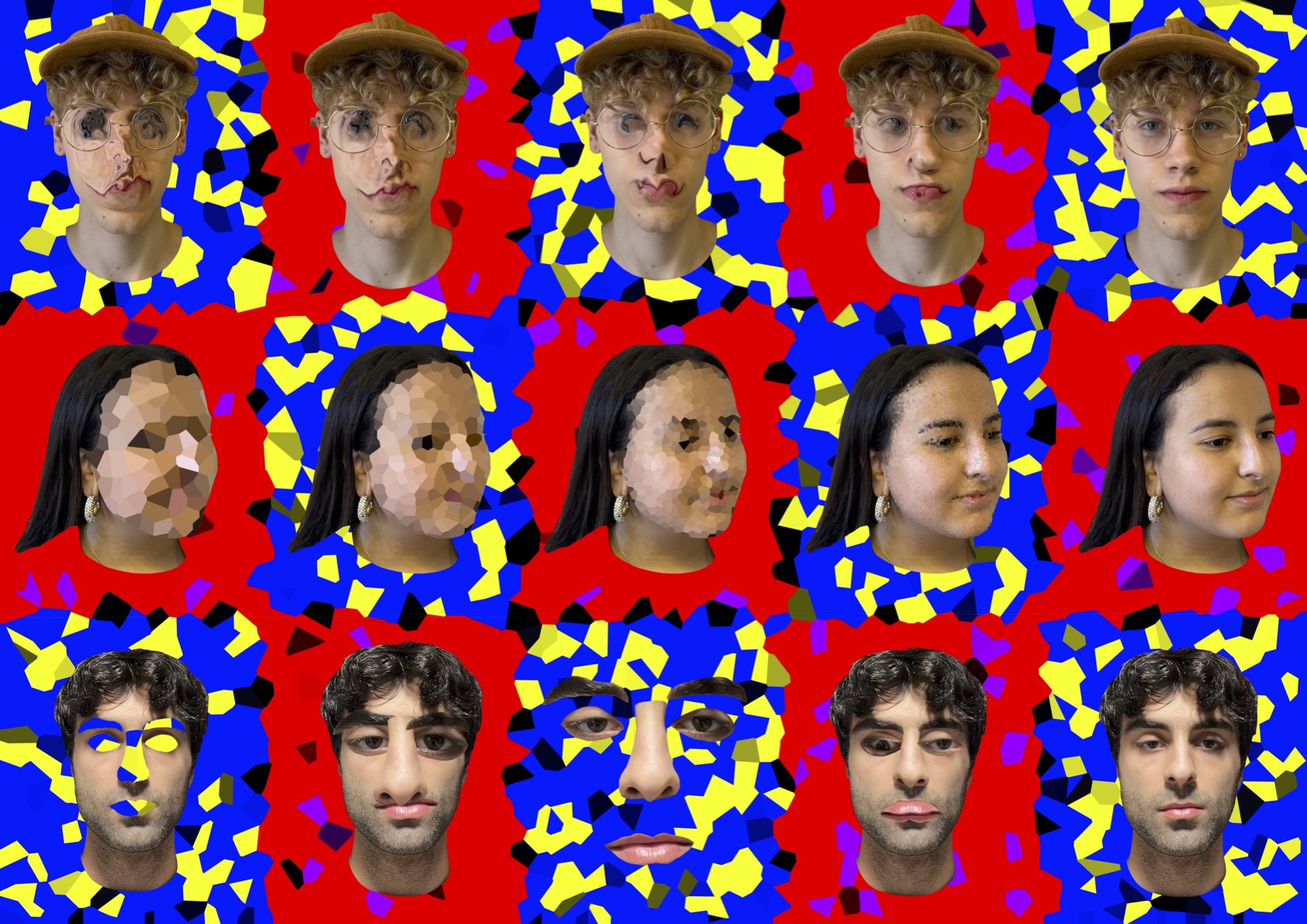
The editing of facial features through distortion and blurring, alongside a distracting background, attempts to highlight the confusion that may be felt by a person who has facial blindness. We aimed to reflect their disorientation when looking at other people’s faces.
Our decision to include stages of the perceptual process represents an attempt to understand their struggle to both distinguish between faces and associate faces with individuals. Accessories such as earrings, caps and glasses are unaltered as we have learned that some people with facial blindness find it helpful to use alternative visual strategies to identify individuals – such as memorizing commonly worn accessories.
With thanks to, Ella, Anna Jodie, Zoey, Luke and Holly
This collaborative piece was exhibited at the Foundations of Medicine Conference 2022
Presented by Hammad, Anna and Zoey
Comments
Add legacy comments here
This artwork depicts how people with facial blindness (prosopagnosia) perceive their own and others faces differently every time due to injury to their brain. The artwork shows the extent to which their brain can change all facial features to make them almost unrecognisable. The mosaic-like artwork could indicate how people feel as if they become dissociated from their body due to not being able to recognise themselves, which could in turn lead to mental health disorders. The variety of different ways that the faces are changed in this artwork shows how this condition affects everyone differently, which could lead to lesser understanding and sympathy for people with this condition as it is so difficult to understand their experiences as not one experience is the same. In addition to the mental health disorders, this could lead to disorders such as body dysmorphia, affecting social situations and daily life experiences.
This artwork explores how people living with facial blindness might perceive themselves and the faces in the world around them. Each face in the grid is distorted in a unique way—some are pixelated, others are stretched or warped. As the audience of this artwork we can get a sense of the confusion faced by someone living with facial blindness. The randomness of these patterns and shapes reflects on how unique the challenges posed for a person living with this may be. The bright background colours of red, blue, and yellow make the images even more eye-catching.
I find this piece a really interesting and effective portrayal and exploration of facial blindness. The various degrees and ways that the faces have been distorted – or not on the far right – illustrate the variation in how this can be experienced. The use of bold contrasting colours in irregular and random shapes adds to the disorientation and creates an overwhelming environment for the viewer which I think is a powerful way of making people who do not live with facial blindness understand the ways it can cause challenges for someone who does. The use of a grid and various different faces I think shows how many different aspects of life – specifically in social situations and interpersonal relationships that this condition can effect. Having the accessories worn by the middle and top individuals not change anchor the specifics of this condition and having the bottom row individual not wear any accessories is particularly disorientating and can show the benefits and challenges of different coping mechanisms for facial blindness.
This artwork intrigued me as it is a creative yet accurate representation of prosopagnosia and the struggle of people suffering with this condition as some of the faces are quite jarring and non human. The distortion of the faces in various ways, whether they be pixelated, warped or facial features cut out, conveys the dissociation and devastation as people with this condition can no longer recognise their loved ones. Additionally, the use of the vivid colours red yellow and blue creates an overpowering environment that is quite difficult to look at, perhaps indicating how people with facial blindness find the condition exhausting, again showing the challenges and hardships of the disease as it makes social interactions stressful and may start to have an effect on their closest relationships. The use of not altering accessories also educates us more on the disease and how we can help people we know with this condition by wearing accessories unique to us as individuals so people with the condition don’t suffer so much in social situations.