
Permanence
FoM Group 14





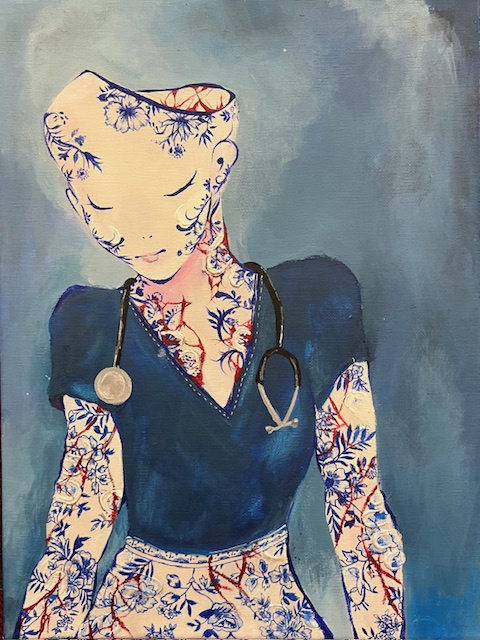
This painting represents female surgeons who have experienced sexual assault from colleagues.
We’ve portrayed a woman to be a porcelain vase, we wanted to show the fragility and delicate nature of human life. By painting these red cracks, we wanted to represent scars and the permanent nature of the trauma, this is to emphasize the physical and mental pain she has endured. The use of the red on her body apart from the face is symbolic of how she repressed her feelings similarly to how the female doctors and nurses in the NHS stayed quiet for so long about sexual assaults from male practitioners.
The traces of finger marks left on the woman’s skin visualises the aftermath of violent touch – just as pottery becomes unchangeable after being fired, a permanent imprint is left on victims – no amount of paint can truly conceal the damage done.
We also wanted to depict the surgeon as an object to reflect objectification of women and the lack of care given to women in healthcare, and more broadly, society.
Jeslyn Ooi and Laibah Chaudry, Effective Consulting Year 1
Creative Piece Highly Commended by student peers vote, Foundations of Medicine Conference 2023
This painting represents the horrifying experiences of female surgeons in the workplace. A major analysis of NHS staff in 2023 found that nearly 2/3 of female surgeons have been a target of sexual harassment and 1/3 have been sexually assaulted by colleagues in the past five years. These studies revealed the shocking prominence of rape culture* within NHS hospitals, the shocking accounts of female surgeons and the unacceptable actions of their male colleagues, who are often senior to them. This piece therefore depicts a rather current issue that the NHS is tackling. Illustrated as a porcelain vase, a female surgeon is shown to be broken and riddled with red scarring to capture the permanence of mental and physical consequences of sexual assault and rape. Finger markings painted in white show the artists’ great attention to detail, as if the sexual assault committed was the act of firing pottery, and so one’s nonconsensual touch remains permanently molded into the porcelain, as it does in humans. Moreover the blue background and blue and white porcelain symbolises the NHS as an overarching theme that is plagued by this issue. The solemn expression and tired closed eyes of the surgeon is also indicative of how women may feel disappointed by the lack of action taken by the NHS and exhausted from the psychological consequences of sexual trauma. These artistic decisions made by the painters have been thoughtfully intentional however, the decision to paint the surgeon as porcelain, may be misinterpreted as representing fragility that many wrongly associate with women, rather than the fragility of life. Overall’, Permanance’ is an incredibly beautiful piece yet simultaneously evokes anger, sadness and helplessness amongst those who are aware of the story it tells.
*Rape culture is defined as “a society or environment whose prevailing social attitudes have the effect of normalising or trivialising sexual assault and abuse.”
This piece illustrates the pain and suffering of female surgeons in a poignant way. The mixture of the blue flowers, red scars, and fingerprints highlight the complexity of emotions that the women would be feeling. The contrasts may hint at the dichotomy between speaking up and not “sabotaging” your career.
The china patterns are permanent and incorporated into the subject’s skin, which I interpret to be representative of the way survivors of sexual assault may feel like people can tell, that they are dirtied, impure or obviously tainted due to the trauma.
Furthermore, the beauty of the patterns may also represent how victims are not often allowed to be ugly in their suffering. Especially in a healthcare role, where you are providing comfort to others and are viewed as a beacon of steadiness are surety, survivors may feel the needs to package their trauma and become palatable or approachable once more in order to carry out their job.
Additionally, the chipped/broken skull of the subject may represent the mental fracture of assault. Inside the hollow structure, you can see red cracks, which the creators of the piece have said symbolise scars and the permanence of trauma. Opposed to the outside of the head, covered in beautiful china patterns, the red cracks inside preview the ugly reality.
While the overall blue colour scheme of the painting could represent the sadness and loneliness experienced by survivors, it is also a colour associated with the NHS. In terms of identity, the painting is cohesive in its monotone blue palette, which may imply the subject is otherwise at home and complete in her identity as a surgeon—other than the contrasting red cracks which act to disrupt this relationship. I think this may be representative of how sexual trauma can make survivors unsure of their capability to not only help themselves but also others, their patients and colleagues, and make them insecure in their identity as a healthcare provider.